Premade Pouch vs. VFFS: Which Format Fits Your Product and Volume?
- 1.Where the two formats actually diverge
- 2.Bag format capability: the constraint VFFS cannot engineer around
- 3.Changeover time: VFFS wins the straight line, premade wins the schedule
- 4.Product fit: where VFFS sealing gets exposed
- 5.Volume and SKU count: build your own crossover
- 6.The decision sequence: four questions, in order
Where the two formats actually diverge
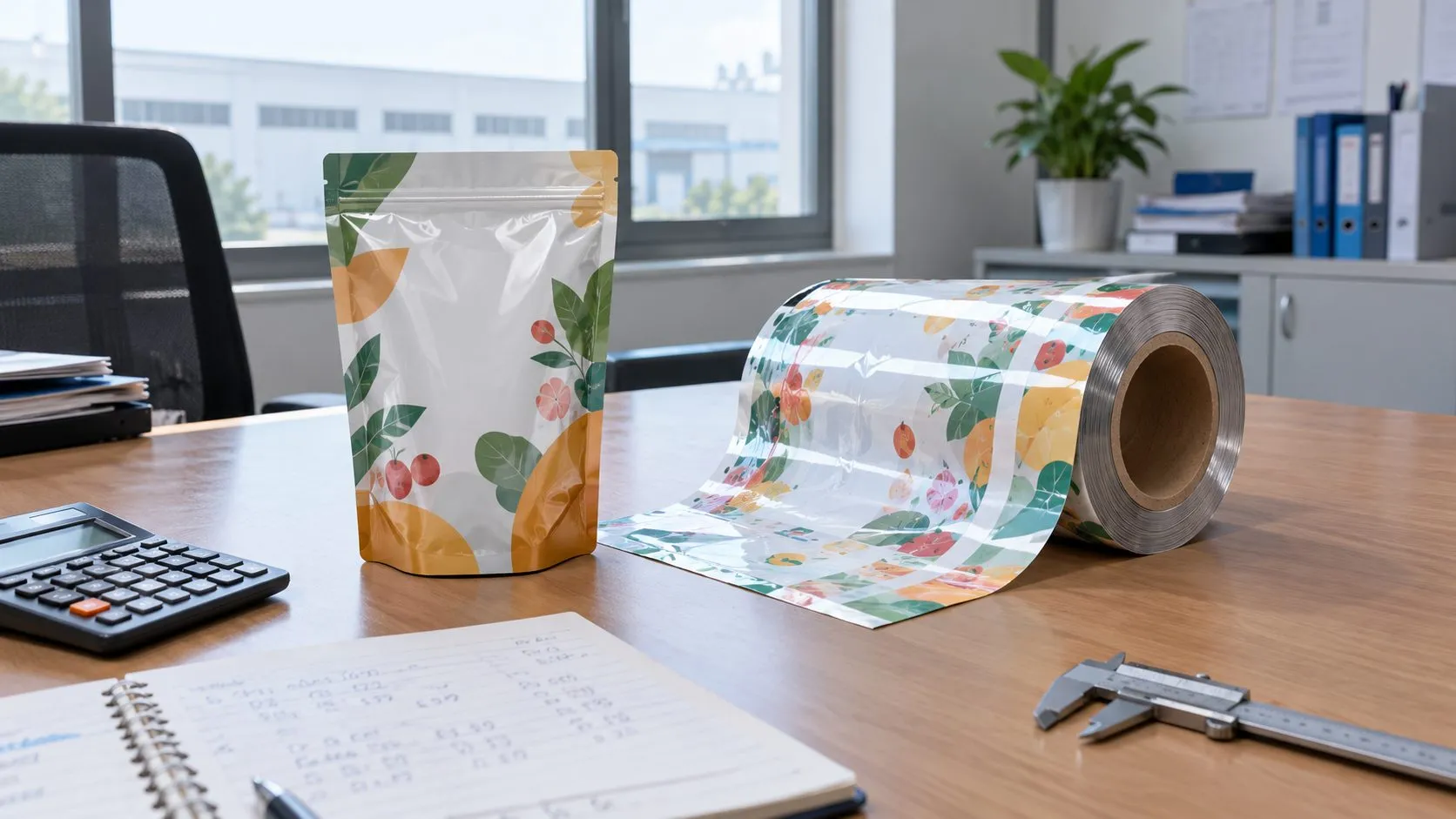
Both machines weigh, fill and seal. The difference is where the bag comes from. A VFFS pulls printed film from a roll, forms a tube, fills it and seals the top; the bag is made inline and its shape is set by the forming tube and sealing jaws. A premade pouch machine takes a pouch that a converter has already printed, laminated and fitted with a zipper or spout, opens it, fills it and seals the top. That single architectural difference drives cost structure, speed ceiling, format flexibility and where quality problems appear.
Bag format capability: the constraint VFFS cannot engineer around
VFFS produces pillow bags, gusseted bags, quad-seal bags and block-bottom bags from rollstock, and can form a stand-up pouch within the limits of the forming tube. Premade pouch machines handle stand-up pouches, zipper pouches, Doypacks, flat-bottom pouches, three-side-seal pouches, shaped pouches and spouted pouches, because those features are built into the pouch before it reaches the machine. A VFFS can run a zipper pouch only with a dedicated zipper applicator and a compatible film structure; a premade machine runs a zipper pouch because the pouch is a zipper pouch.
Resealability, pour control through a spout and shelf-standing geometry are consumer-facing features that premade pouches deliver as a material choice rather than a machine-tuning exercise. If your retail strategy depends on a flat-bottom bag with a pocket zipper or a spouted pouch for liquids, the format decision has already eliminated VFFS before speed or cost enters the conversation.
Changeover time: VFFS wins the straight line, premade wins the schedule
A VFFS format change involves the forming tube, sealing jaws, film tracking and sometimes film structure tuning; in practice this takes 20–45 minutes. A premade pouch line changes over in 10–30 minutes, with some models reaching 5–20 minutes for a pouch size change. If your plant runs three SKUs per shift, the VFFS loses 60–135 minutes of available time to changeovers before any unplanned stop is counted; the premade line loses 30–90 minutes. Over a 250-day year that difference compounds into a meaningful Availability gap in OEE, and it is the reason a slower premade machine can out-produce a faster VFFS on a high-mix schedule.
Product fit: where VFFS sealing gets exposed
VFFS forms and seals the bag vertically, with a single fill nozzle per lane. That architecture is efficient for free-flowing products, but it creates a sealing-window problem for fine powders and low-viscosity liquids: product can migrate into the seal area before the jaws close, and even with anti-contamination measures, 100% prevention is difficult to guarantee. Powders that become airborne during fill, and liquids that splash or string, are the classic failure modes. A premade pouch machine opens a finished pouch with a wide mouth and seals after filling; the pouch's pre-formed seal geometry and the machine's controlled opening sequence give more margin for products that do not behave like dry granules.
This does not make VFFS unsuitable for powders—many coffee and flour lines run VFFS successfully with degassing valves and sealed fill systems. But it does mean the product trial matters more than the spec sheet. If your product is a fine powder with a low bulk density or a sauce with particulate, run a 24–48 hour test on the actual film or pouch before signing. The reject rate from that run is the only credible input for the waste line in your cost model.
Volume and SKU count: build your own crossover
Rollstock film typically runs 30–50% cheaper per square meter than a finished premade pouch, because the converter's printing, lamination and zipper or spout work is already embedded in the pouch price. At high annual volume of a single standard bag format, that material gap usually dominates and VFFS wins on cost per pack. At lower volume or across many SKUs, the VFFS tooling cost per bag size and the changeover time lost between formats can erase the film saving. The crossover commonly falls between roughly 1 million and 20 million packs per year, and the spread is wide because each plant's crossover depends on its SKU count, labour rate and shift pattern.
The number that matters is not a threshold borrowed from another plant. It is the crossover built on your bag size, your SKU count, your labour rate and your shift pattern. A VFFS running 55 bags per minute for one 8-hour shift across 250 days produces about 6.6 million packs a year; the "1 million" and "50–60 bags per minute" thresholds quoted in the market sit roughly 6× apart because each assumes a different utilisation. Before comparing quotations, convert both film and pouch pricing to cost per saleable pack, not cost per kilogram or cost per pouch.
| Decision variable | Favours premade pouch | Favours VFFS |
|---|---|---|
| Annual volume (single format) | Below roughly 10–20 million packs | Above the crossover; film savings compound |
| SKU count / changeovers per shift | 3+ changeovers per shift; many pouch sizes or styles | Long campaigns of one bag format |
| Bag features | Zipper, spout, flat-bottom, shaped pouch, pocket zipper | Pillow, gusset, quad-seal, standard block-bottom |
| Product risk | Powders, fine granules or liquids where seal contamination is a concern | Free-flowing granules and dry products with controlled fill |
| Capital budget | Higher upfront; lower tooling per format | Lower entry price; tooling cost per bag size |
The decision sequence: four questions, in order
Do not start with machine price. Start with the format your retail channel requires, then let volume and SKU count decide the architecture.
- "Does my package need a zipper, spout, flat bottom or shaped outline?" If yes, premade pouch is the default; VFFS can approximate some of these with add-on tooling, but at higher complexity and narrower operating windows.
- "How many packs per year, and how many SKUs?" Convert to cost per saleable pack at your utilisation. If the answer is "10 million packs across 12 SKUs," the VFFS film savings may never be realised because changeovers eat the volume advantage.
- "What is my changeover time from last good pouch to first good pouch, measured on my formats?" Use the supplier's measured number, not a catalogue range. A 45-minute VFFS changeover on a three-SKU shift is 2.25 hours of lost production.
- "Does the product stay out of the seal zone on a bad day?" Fine powders and viscous liquids favour the premade pouch's fill-after-open sequence. Free-flowing granules favour VFFS economics at volume.
A premade pouch machine is not the "premium" choice and VFFS is not the "efficient" choice in the abstract. Premade wins on format capability and schedule agility; VFFS wins on film cost and straight-line speed. The buyer's job is to calculate which of those two constraints binds first in their plant. For premade pouch speed ranges, format capabilities and changeover architecture, see the premade pouch packing machine specifications, or review the full configuration and project process on the rotary premade pouch packaging machine page.
Planning a line for your product? Send us the product, pouch size and target output. Talk to our engineers →
FAQ
VFFS roll film is cheaper per unit area than a finished premade pouch, and at high volume of a single standard bag format VFFS usually wins on cost per pack. But the crossover commonly falls between roughly 1 million and 20 million packs per year depending on SKU count, labour rate and shift pattern. Below the crossover, the premade pouch's lower tooling burden and faster changeovers often make it the lower total-cost choice.
A VFFS can run a zipper pouch only with a dedicated zipper applicator and a compatible film structure, and spouted pouches are not a standard VFFS format. Premade pouch machines handle zipper pouches, spouted pouches, flat-bottom pouches and shaped pouches because those features are built into the pouch before it reaches the machine.
A VFFS format change takes roughly 20–45 minutes and a premade pouch change takes 10–30 minutes, with some premade models reaching 5–20 minutes for a pouch size change. The gap matters most in high-mix plants: three changeovers per shift on a VFFS can consume 60–135 minutes of available production time before any unplanned stop is counted.