How Does a Premade Pouch Packaging Machine Work?
What a premade pouch machine does differently
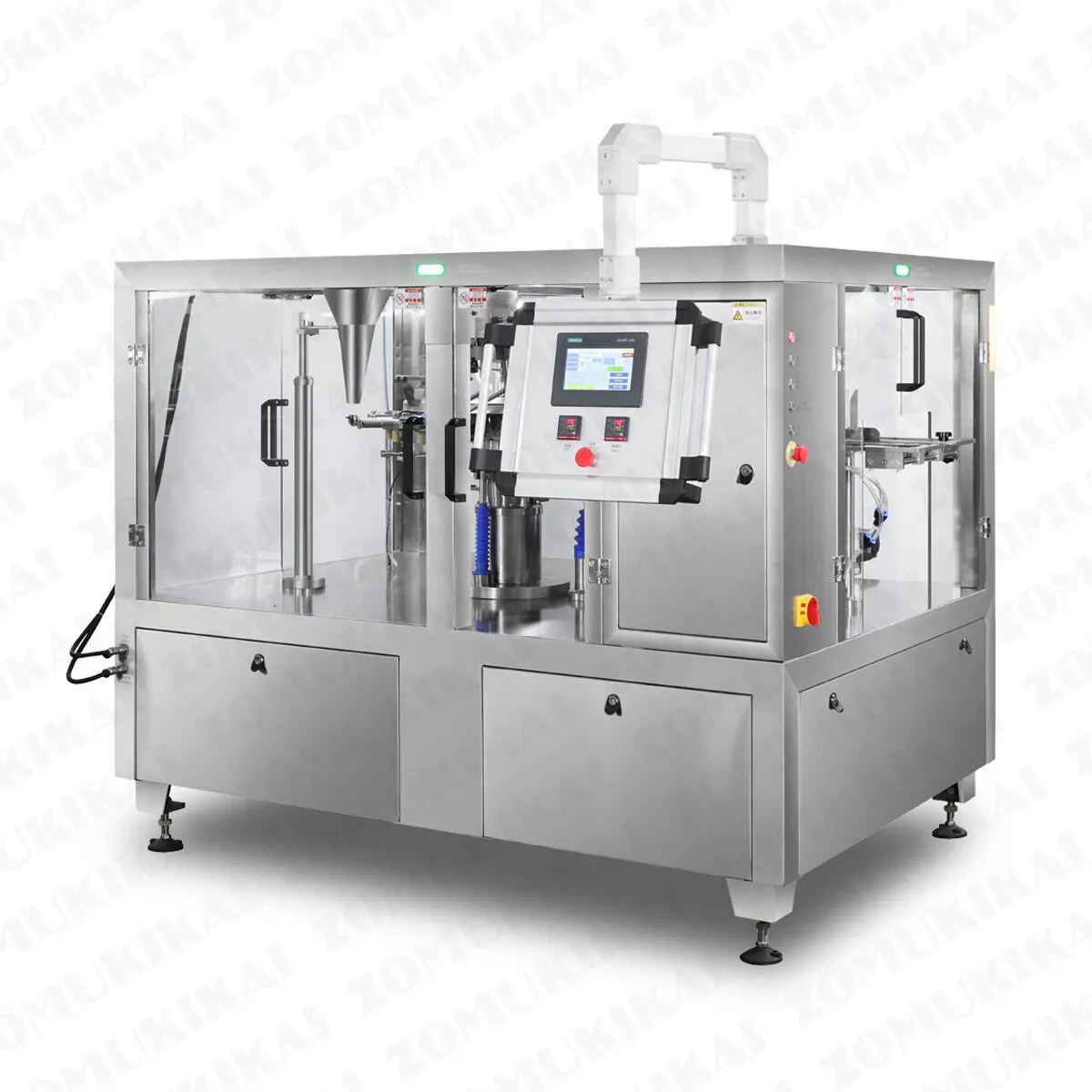
A premade pouch machine starts from a bag that already exists. The pouch is printed, shaped and sealed at the bottom before it reaches the machine, so the machine never forms a bag from film. Its job is handling: pick the pouch, open it, hold it steady while product enters, close the mouth cleanly and release the finished pack. That is why the premade pouch packaging machine working principle is usually described as a station sequence, not a film path.
Because the bag is finished before filling, print quality and pouch style are decided at the pouch supplier, and the machine's format range is what limits which bags can run. On the ZP-8R120D that range is 80 mm to 170 mm in pouch width and 100 mm to 400 mm in pouch length, with a packing range of 10 g to 500 g.
The station sequence in brief
A rotary premade pouch packaging machine carries pouches on a carousel, and each station performs one operation as the pouch passes. The confirmed sequence runs: vertical pouch feeding from the magazine, ribbon date coding, pouch-top opening, dosing and filling, a reserve station, pouch-top straightening, double heat sealing, then forming and discharging. The 8 station pouch packaging machine workflow is the common layout because it gives one dedicated slot for each step and one spare slot for options.
The reserve station is where product-specific functions are added, such as powder dedusting or empty-pouch inspection. Nitrogen flushing, vacuum and special pouch handling for shaped or zipper pouches are added by combining additional functions onto the stations; the carousel layout itself stays the same. The full standard configuration and component list are set out on the rotary premade pouch packaging machine page.
Opening and sealing: the two steps that decide quality
Opening uses vacuum cups on both sides of the pouch top plus compressed air to part the mouth. A pouch that does not open must be detected and rejected before it reaches the filling station, otherwise product lands outside the bag. Sealing closes the mouth with heat and pressure after the pouch top has been straightened, so the jaws meet two flat, aligned edges. Straightening before sealing is what prevents folded or wrinkled mouths, which are the usual source of leaks found later in distribution.
Dosing is chosen by product, not by machine
The filling station is configured around the material:
- Granules such as coffee beans, nuts, frozen pieces or pet food: multihead weigher.
- Powders such as flour, protein powder or ground coffee: auger filler.
- Liquids such as sauces, juices or detergents: liquid filling system.
Powders tend to leave dust on the pouch mouth, which is why a dedusting option on the reserve station is often specified together with an auger filler. Where a scoop is packed with a powder, a scoop feeder sorts scoops in a vibratory bowl and releases one at a time at the filling station: after the powder is dosed, the scoop drops into the same pouch and the pouch continues to sealing. No separate station is needed.
Single lane and dual lane
A single-lane carousel handles one pouch per index. A dual lane premade pouch machine process runs two pouches through every station at the same time, which raises output for the same footprint but demands tighter synchronization and gripper alignment. The dual lane premade pouch packaging machine ZP-8R120D is built this way and reaches 20 to 80 pouches per minute across its pouch and fill range.
What the machine needs from you
Pouch dimensions, pouch material and construction, fill weight and the product itself determine the dosing module, the opening settings and the sealing parameters. Pouches are tested before a configuration is fixed, and the layout and configuration are prepared from your product, pouch and site information. A high speed pouch packaging machine is only high speed on a pouch and product it was set up for; running outside that setup costs reliability at the opening and sealing stations.
Planning a line for your product? Send us the product, pouch size and target output. Talk to our engineers →
FAQ
A premade pouch packaging machine opens the pouch with vacuum cups on both sides of the pouch top plus compressed air to part the mouth, and pouches that fail to open are rejected before the filling station.
A premade pouch machine fills and seals bags that are already manufactured, so the pouch is printed and shaped before it reaches the machine, while a form-fill-seal machine makes the bag from a film roll inside the same cycle.
The standard 8 station pouch packaging machine layout covers vertical pouch feeding, ribbon date coding, pouch-top opening, dosing and filling, a reserve station, pouch-top straightening, double heat sealing, and forming and discharging.
A premade pouch packaging machine handles pouch sizes within its stated range; the ZP-8R120D accepts pouch widths from 80 mm to 170 mm and lengths from 100 mm to 400 mm, with a packing range of 10 g to 500 g.
Powders, granules and liquids can be packaged on a premade pouch machine once the filling station is matched to the product: an auger filler for powders, a multihead weigher for granules and a liquid filling system for liquids.